
Platform profile · India · Electro-optical stand-off precision-guidance-kit family · Indian Air Force
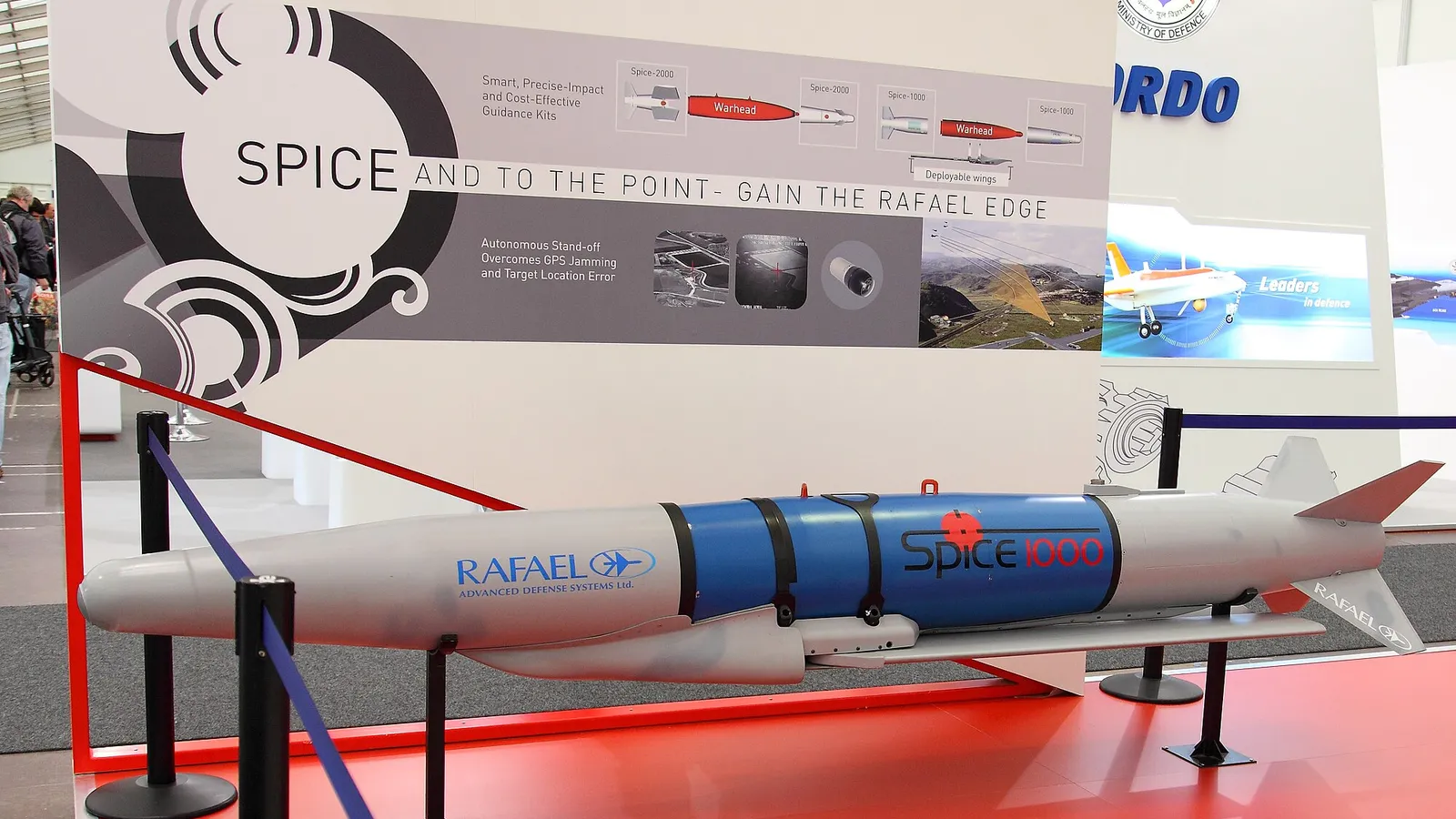
SPICE (Smart, Precise-Impact and Cost-Effective) 1000/2000 guidance kits
OngoingIn IAF service since 2019 with local KRAS production; DAC accorded AoN for additional SPICE-1000 long-range guidance kits on 2025-12-29.
On 29 December 2025, the Defence Acquisition Council granted Acceptance of Necessity for SPICE-1000 long-range guidance kits for the Indian Air Force, the newest confirmed Indian procurement step for the family. SP's Aviation reported that the service signed a Rs 300 crore emergency order for 100 weapons in June 2019, with the first building-blaster batch reported at Gwalior by September. Sources told The Indian Express that Mirage 2000 aircraft used SPICE-2000 penetrator weapons at Balakot on 26 February 2019; a later IAF review reported five of six planned aimpoints hit, while Reuters found no visible bomb damage in post-strike satellite imagery. KRAS in Hyderabad subsequently disclosed that it had produced more than 200 SPICE-2000 weapons, 80 percent of them for Indian forces. With electro-optical scene matching, GPS-independent terminal homing and 60-125 km stand-off ranges across the two covered variants, SPICE gives India a resilient precision-strike option against defended fixed targets.
Updated 8 months ago Updated 29 Dec 2025
Verified figures
Specifications
| Specification | Value |
|---|---|
| Covered variants | SPICE 1000 and SPICE 2000 guidance kits ↗ |
| Compatible warhead classes | 1,000 lb and 2,000 lb general-purpose or penetration warheads ↗ |
| SPICE 1000 stand-off range | 125 km ↗ |
| SPICE 2000 stand-off range | 60 km ↗ |
| Warhead effects | Blast-fragmentation or penetration ↗ |
| Accuracy | 3 m CEP ↗ |
| Seeker | Electro-optical seeker ↗ |
| Terminal homing | Automatic target acquisition using scene-matching algorithms ↗ |
| Navigation resilience | GPS-independent terminal attack; designed for GPS-jammed environments ↗ |
| Attack mode | Fully autonomous fire-and-forget ↗ |
| Operating conditions | Day, night and adverse weather ↗ |
| Aircraft integration | Common interface for single-seat and dual-seat fighter aircraft ↗ |
Spec sources: rafael.co.il ↗
Changelog
Program timeline
-
The Defence Acquisition Council granted Acceptance of Necessity for SPICE-1000 long-range guidance kits for the Indian Air Force as part of proposals worth about Rs 79,000 crore.
-
KRAS chief Rudra Jadeja disclosed that the Hyderabad plant had produced more than 200 SPICE-2000 weapons under a $30 million order, with 80 percent destined for Indian forces.
-
By this date, the Indian Air Force had begun receiving the first building-blaster SPICE-2000 batch at Gwalior for its Mirage 2000 fleet under the post-Balakot emergency order.
-
SP's Aviation reported that the Indian Air Force signed a Rs 300 crore contract with Rafael for 100 SPICE glide weapons as an emergency purchase to build its war-reserve stockpile.
-
Official sources said the Indian Air Force had begun the process of equipping Su-30MKI fighters with SPICE-2000, extending the weapon beyond the Mirage 2000 fleet.
-
Reuters analysis of 4 March satellite imagery found the Balakot madrasa buildings still standing with no discernible bomb damage, conflicting with Indian claims about the strike's effects.
-
Sources told The Indian Express that Indian Mirage 2000 aircraft used SPICE-2000 penetrator precision-guided munitions in the Balakot strike; six were planned and five released.
-
Kalyani Rafael Advanced Systems opened its Hyderabad facility and said Rafael's SPICE air-to-surface weapons would also be manufactured there; company officials were discussing supply with the IAF.
0 tagged stories
Coverage
No tagged stories yet — coverage lands here automatically.